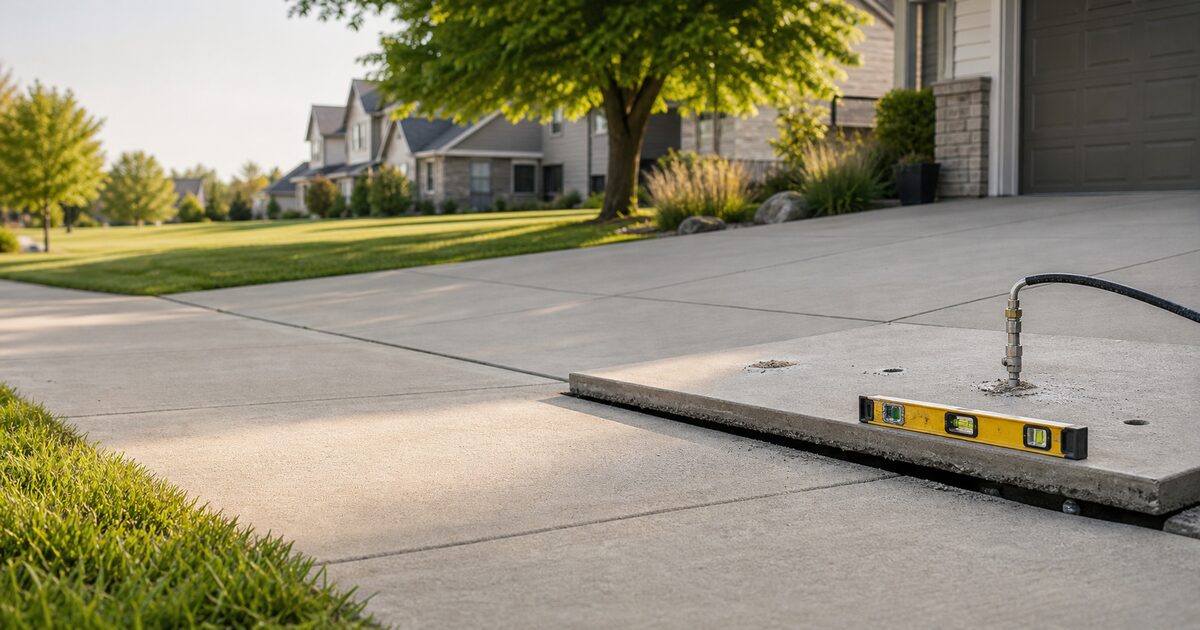
Concrete leveling is not the right fix for every slab.
Lifting is useful when settled concrete is still worth saving. It is less useful when the concrete itself has failed or the cause is still active.
- Broken slabs
- Heaving
- Washout
- Water
Prefer to call? (402) 347-7788
Replacement May Be Better When
A contractor may still review the project, but these conditions often push the conversation toward replacement instead of lifting.
- The slab is broken into many loose pieces.
- Large sections are crumbling or spalling.
- The concrete has heaved upward from roots, frost, or base movement.
- The slab was poured too thin for its use.
- The surface needs a new slope or layout, not just a lift.
Fix Water Before Repeating The Problem
Water can wash out soil, keep joints open, and push settlement back into the same area. Leveling may help the symptom, but water management often decides whether the repair lasts.
- Downspouts discharge beside the slab.
- Soil slopes toward the driveway, patio, garage, or foundation.
- Water pools along a joint after rain.
- A gap beside the slab collects runoff.
- The same panel has dropped more than once.
Ask For Broader Review When
Some problems should not be framed as simple slab lifting until the surrounding conditions are checked.
- Water is entering the basement or garage.
- Foundation walls, retaining walls, masonry, or steps nearby are moving.
- The slab supports a structure or heavy equipment.
- There are large voids visible under the concrete.
- The settlement happened suddenly.
Frequently asked questions
Can a badly broken slab be mudjacked?
Sometimes a contractor can lift a cracked slab, but concrete that is crumbling, loose, or broken into many pieces usually does not lift predictably. Replacement may be the better repair.
Should drainage be fixed before concrete leveling?
If water is washing soil away or draining toward the home, drainage should be discussed before or alongside the lift. Otherwise the slab can settle again after repair.
Who should review foundation or wall movement near a slab?
If nearby walls, masonry, retaining walls, or the foundation appear to be moving, ask a qualified foundation, structural, or drainage professional before treating the issue as simple slab settlement.
How Omaha Slab Repair works
We are a transparent quote-connection guide, not a concrete contractor. Homeowners submit details (surface, location, photos, drainage notes) so available local or regional leveling contractors can respond with useful next steps. We do not perform repairs or guarantee outcomes.
This model keeps the information neutral and helps you get better quotes by sending contractors the details they actually need.
Ready for contractor quotes? Use the form above. The details you send help us route your request to available local leveling teams.